
Cabinet Wrapping for Toronto Rental Properties: A Landlord Turnover Guide
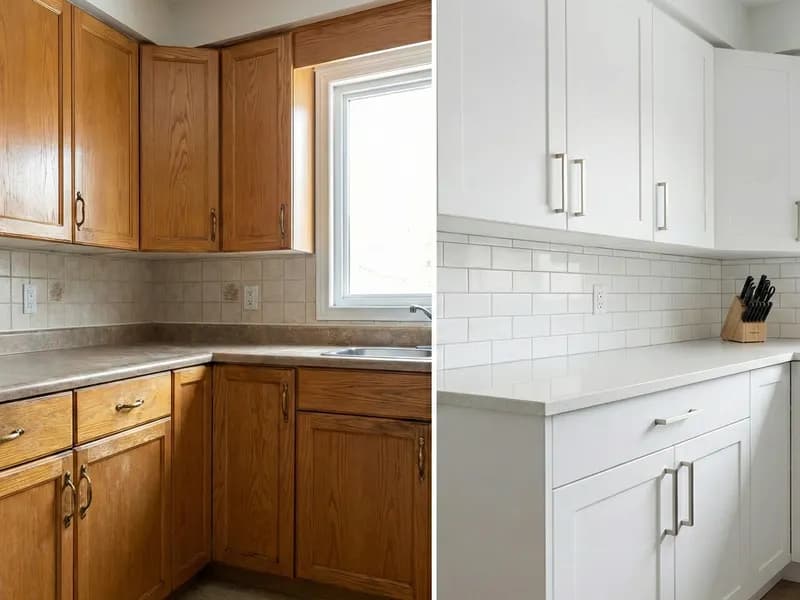
Rental kitchens take visible wear. Cabinet fronts get chipped around handles, finishes yellow, edges lift near heat, and older colours make a unit feel dated in photos before a tenant even books a showing.
For Toronto landlords and property managers, cabinet wrapping can be a disciplined turnover upgrade when the cabinet structure is still sound. It improves the visual surface without turning a rental refresh into a full kitchen renovation.
Where Wrapping Fits in a Turnover
Cabinet wrapping is best used when the kitchen layout works, the boxes are stable, and the doors need a cleaner finish. It is not a substitute for repairing water damage, replacing broken hardware, or rebuilding poor cabinetry.
Good rental-property fits include:
- Condo units with builder-grade brown or yellowed white cabinet fronts
- Kitchens where photos look dated but the cabinets still function
- Turnovers where speed matters
- Units being refreshed before resale or lease-up
- Properties where full replacement would over-improve the asset
For sale-focused prep, see Listing Prep: When Cabinet Wrapping Makes Sense for Toronto Realtors. For owner-occupier comparisons, see Cabinet Wrapping vs Refacing in Toronto.
Why It Can Make Sense for Rentals
A rental kitchen does not always need premium new cabinetry. Often, the better business decision is to remove the dated visual signal while keeping the existing layout intact.
Wrapping can help when the goal is to:
- Improve listing photos
- Shorten vacancy time during turnover
- Avoid demolition and longer contractor sequencing
- Keep renovation spend proportional to rental income
- Refresh multiple similar condo kitchens with a repeatable finish plan
The best rental refreshes are practical. Spend where tenants can see and feel the improvement, but avoid rebuilding components that are already working.
Durability Expectations
Professional architectural film is designed for interior surfaces, but rental durability still depends on tenant use, cleaning habits, heat exposure, and installation quality. Edges, sink areas, and appliance-adjacent panels deserve the most attention during quoting.
The honest expectation: wrapping performs best when tenants are given simple care instructions and the installer avoids surfaces that are already failing.
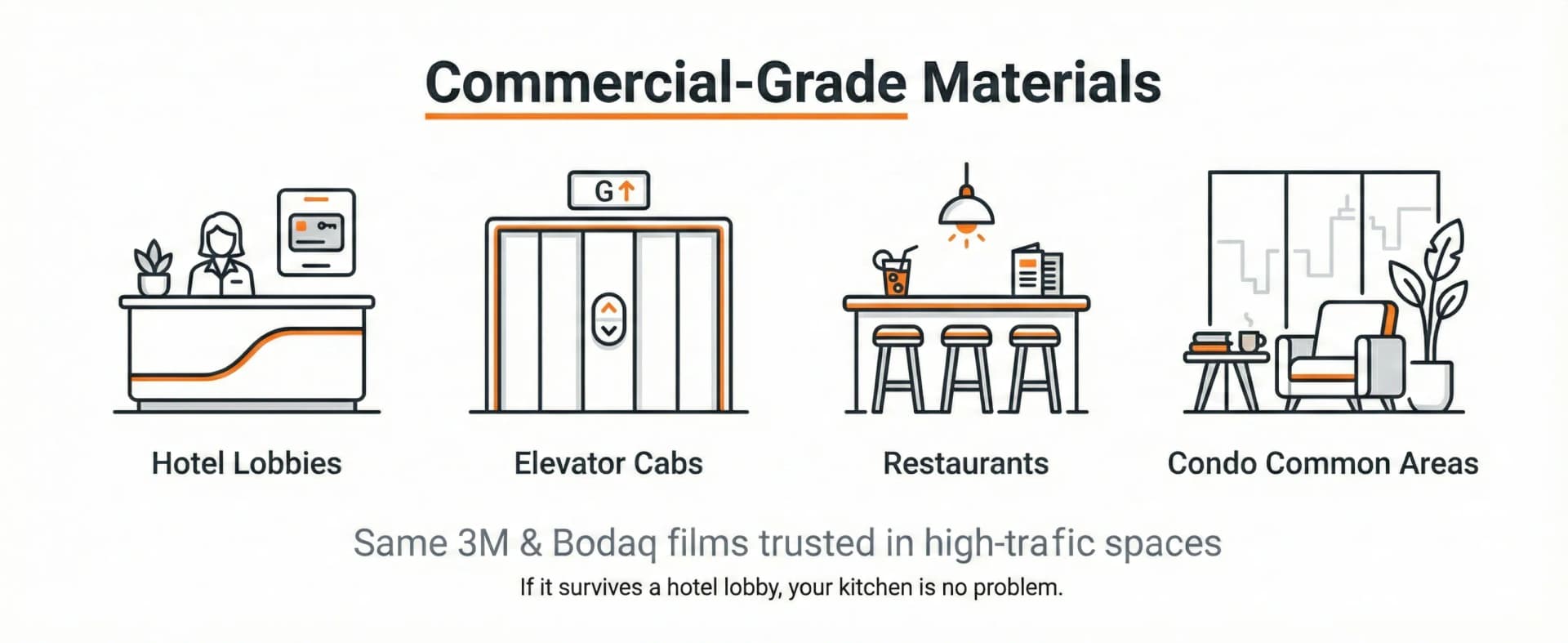
For lifespan detail, read How Long Does Vinyl Wrap Last on Kitchen Cabinets?. For material selection, compare 3M vs BODAQ vinyl wrap.
When Replacement Is Better
Wrapping should be rejected when the underlying cabinet is the problem. A clean new surface over a failing door still leaves a failing door.
Replacement or refacing may be better when:
- MDF is swollen near the sink
- Doors are cracked, warped, or soft
- Hinges are failing across the kitchen
- Boxes are out of square or pulling apart
- The layout is functionally poor
- Tenant damage is too deep for surface prep
For thermofoil kitchens, use the fit checks in Can You Wrap Thermofoil Cabinets?.
Best Finishes for Rental Units
Rental kitchens usually benefit from neutral, durable-looking finishes that photograph cleanly and do not depend on personal taste. Matte white, soft grey, warm greige, light wood grain, and muted charcoal are safer than highly specific statement colours.
| Finish | Rental fit |
|---|---|
| Matte white | Brightens compact condo kitchens |
| Soft grey | Hides minor marks better than pure white |
| Light wood grain | Adds warmth without looking heavy |
| Charcoal accent | Works best on islands or lowers, not every small kitchen |
| High gloss | Use carefully; fingerprints show more |
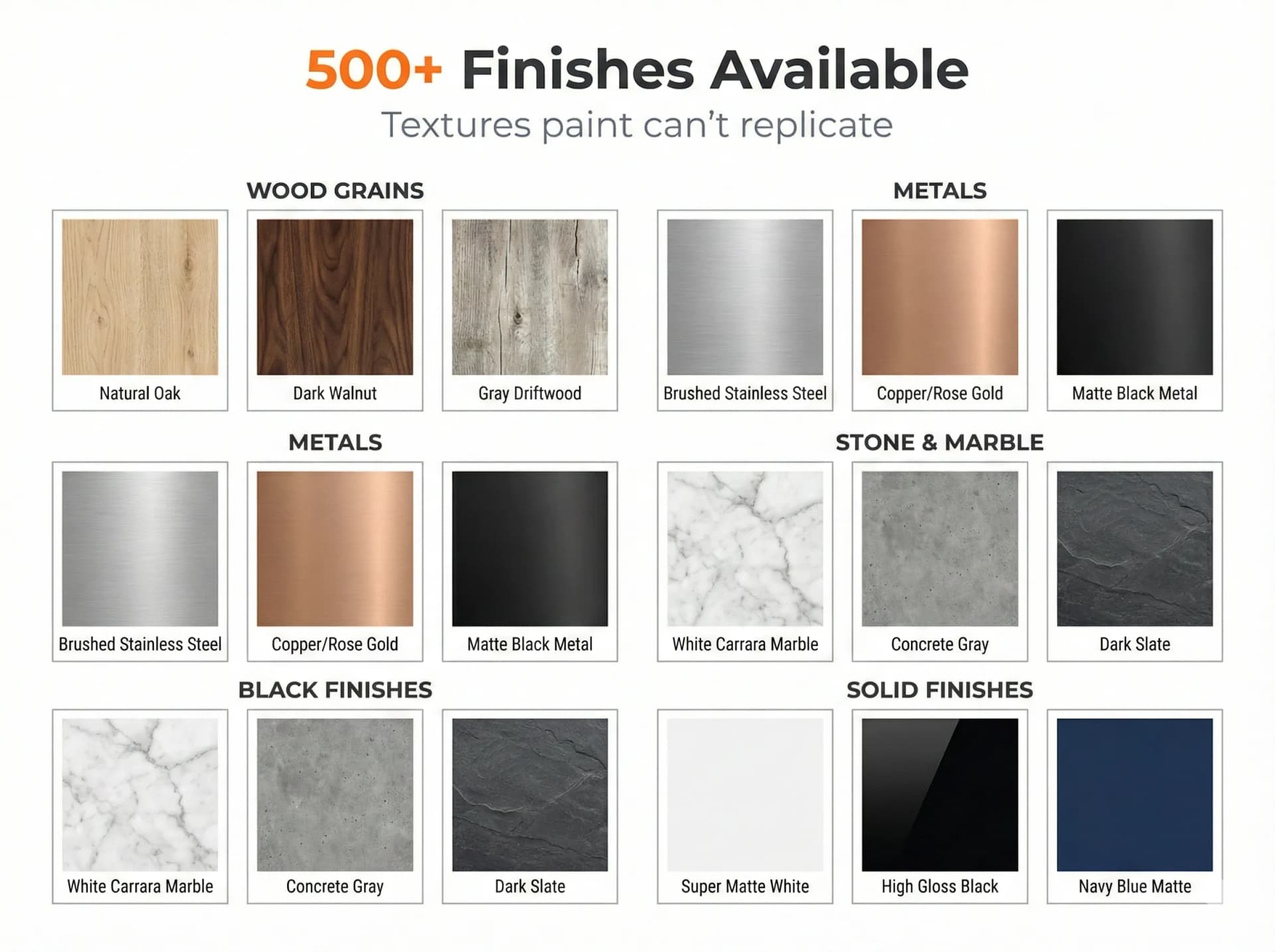
If the unit targets higher-end tenants, a two-tone plan can work: neutral uppers with wood-grain or charcoal lowers. For most rentals, simple is safer.
Photos Property Managers Should Send
A property manager can speed up quoting by sending a consistent photo set from every unit. That makes multi-unit quoting easier and reduces back-and-forth.
Send:
- Full kitchen view from the entrance
- Left and right side angles
- Door and drawer close-ups
- Sink-base close-ups
- Oven and dishwasher-adjacent panels
- Any damaged edges, swelling, or peeling
- Hardware and hinge photos if replacement is being considered
Use the photo checklist for cabinet wrap quotes as a standard intake guide.
Turnover Planning Checklist
For a clean turnover, sequence cabinet wrapping after messy work and before final photography.
Recommended order:
- Remove tenant belongings and clean out cabinets
- Complete plumbing, electrical, appliance, or countertop repairs
- Confirm cabinet structure is sound
- Wrap cabinet fronts, panels, and visible frames
- Reinstall or replace hardware
- Final clean
- Listing photos
That order avoids damaging the new finish during unrelated repair work.
Bottom Line
Cabinet wrapping can be a strong rental-property upgrade when the cabinets are structurally sound and the goal is a cleaner, more marketable kitchen without replacement-level spend. It is most useful for Toronto condos, investor-owned units, and turnover schedules where speed and budget control matter.
Start with the kitchen wrap quote flow or review expected pricing on the cabinet wrapping cost page.
Editorial Disclosure
This article was prepared with AI-assisted drafting and reviewed for practical accuracy against Armor Kitchen Wrap's Toronto cabinet wrapping service positioning.
Ready to Transform Your Kitchen?
Get an instant quote for your cabinet wrapping project. Upload photos and see your price in 60 seconds.
Get Your Free Quote