
Cabinet Wrapping vs Painting: Which Is Better for Your Toronto Kitchen?
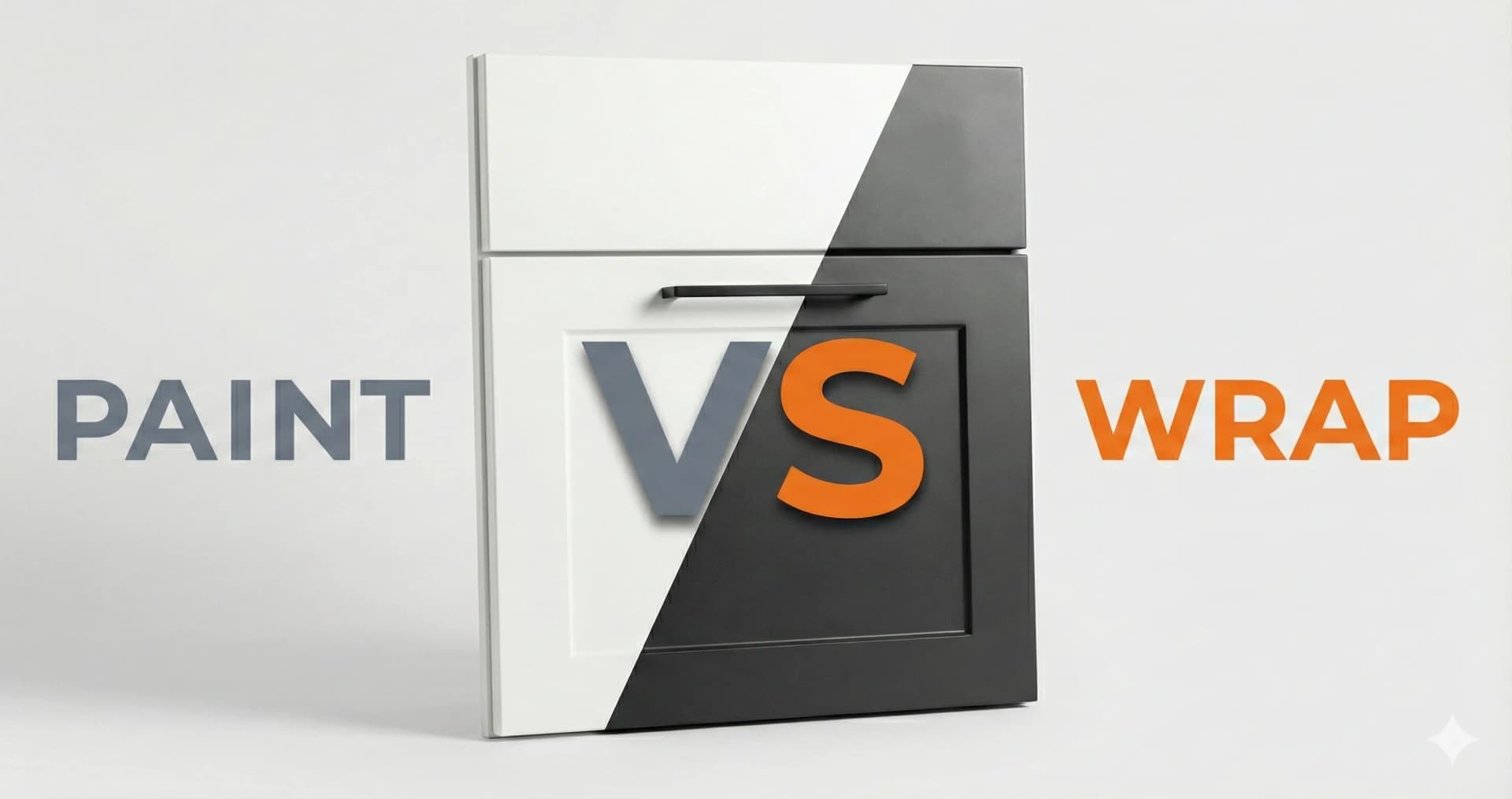
If you're looking to refresh your kitchen without the cost of full cabinet replacement, you've probably landed on two options: painting or wrapping. Both promise a transformed kitchen. Both claim to be cost-effective. So which one actually delivers?
Table of Contents
- The Quick Comparison
- What Is Cabinet Wrapping?
- What Is Cabinet Painting?
- Cost Comparison: Toronto 2024–2025 Pricing
- Timeline: 1–2 Days vs a Week of Disruption
- Finish Options: What Paint Simply Can't Do
- Durability: The Commercial-Grade Difference
- Which Method Works for Your Cabinet Material?
- When Painting Actually Makes Sense
- Common Problems and How to Avoid Them
- Making Your Decision
- Frequently Asked Questions
Here's the short answer: for most Toronto homeowners, cabinet wrapping is faster, cheaper, and offers design options that paint simply can't match. But let's break down exactly why — and cover the few situations where painting might still make sense.
The Quick Comparison
| Factor | Cabinet Wrapping | Cabinet Painting |
|---|---|---|
| Cost (Toronto) | $1,500 – $4,000 | $3,000 – $6,500+ |
| Timeline | 1–2 days | 3–7 days |
| Finish options | 500+ (wood grain, metal, stone, matte, patterns) | Solid colors only |
| Kitchen usable | Same day | Several days without doors |
| Fumes/VOCs | None | High (unless low-VOC paint) |
| Durability | 10–15 years (commercial-grade film) | 8–10 years (ideal conditions) |
What Is Cabinet Wrapping?
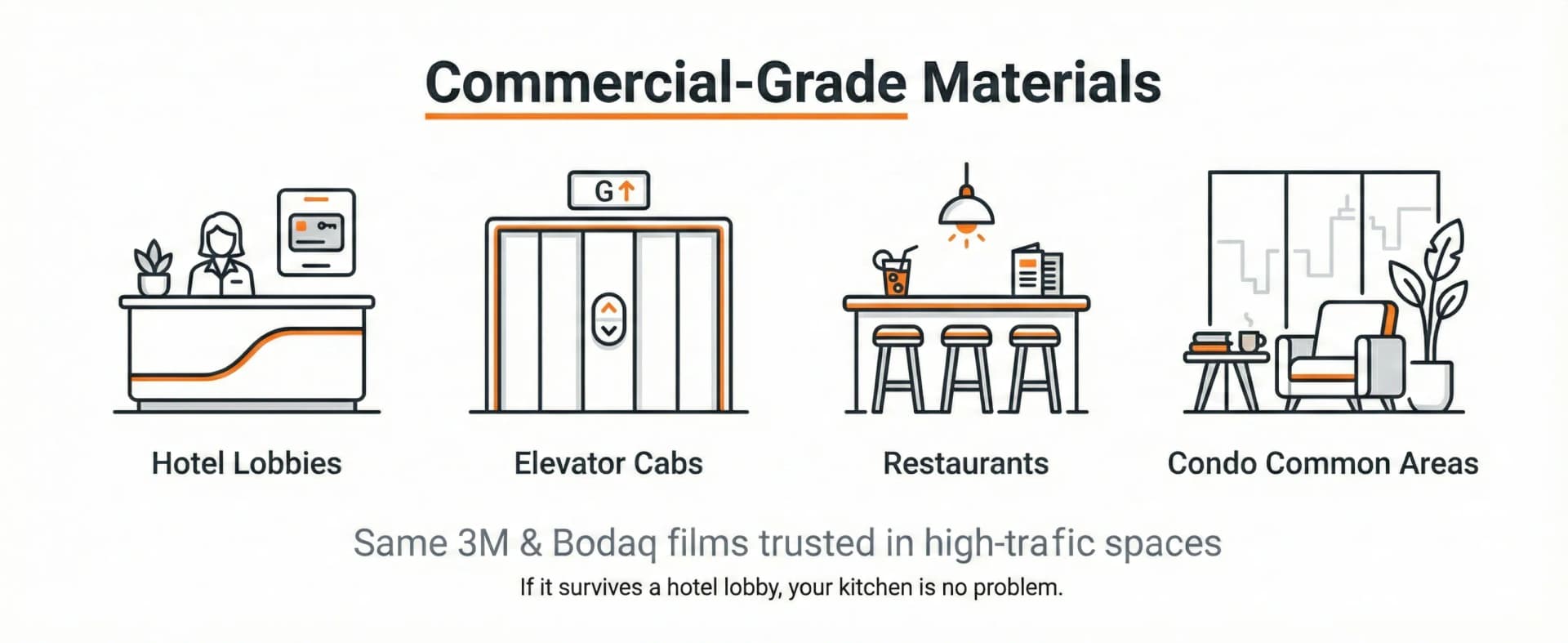
Cabinet wrapping uses architectural vinyl film — the same commercial-grade material you'll find in hotel lobbies, condo common areas, and high-end retail spaces across Toronto. The film is precision-cut and applied to your existing cabinet doors and frames, completely transforming their appearance.
The materials we use (3M and Bodaq architectural films) aren't the craft vinyl you might remember from the 90s. These are engineered products with UV stabilizers, heat-resistant adhesives, and finishes that replicate real wood grain, brushed metal, marble, and stone textures. They're designed to handle thousands of daily interactions in commercial settings — your kitchen won't come close to that level of wear.
The process is straightforward: we measure your cabinets, cut the film to exact specifications, and apply it on-site. Most kitchens are completed in 1–2 days, and you can use your kitchen the same evening.
What Is Cabinet Painting?
Professional cabinet painting involves removing your cabinet doors, sanding and priming every surface, applying multiple coats of paint (usually with a spray system for a smooth finish), and reinstalling everything once fully cured.
It's a legitimate renovation method with a long track record. Done well, painted cabinets can look beautiful and last 8–10 years. The challenge is the process itself: most professional paint jobs take 3–7 days, require a spray booth or dedicated space, and leave your kitchen without doors and filled with fumes during the work.
For solid wood cabinets where you specifically want that traditional painted look, it remains a valid option. But for most Toronto kitchens — especially condos with laminate or thermofoil cabinets — wrapping delivers better results with far less disruption.
Cost Comparison: Toronto 2024–2025 Pricing
Let's talk real numbers.
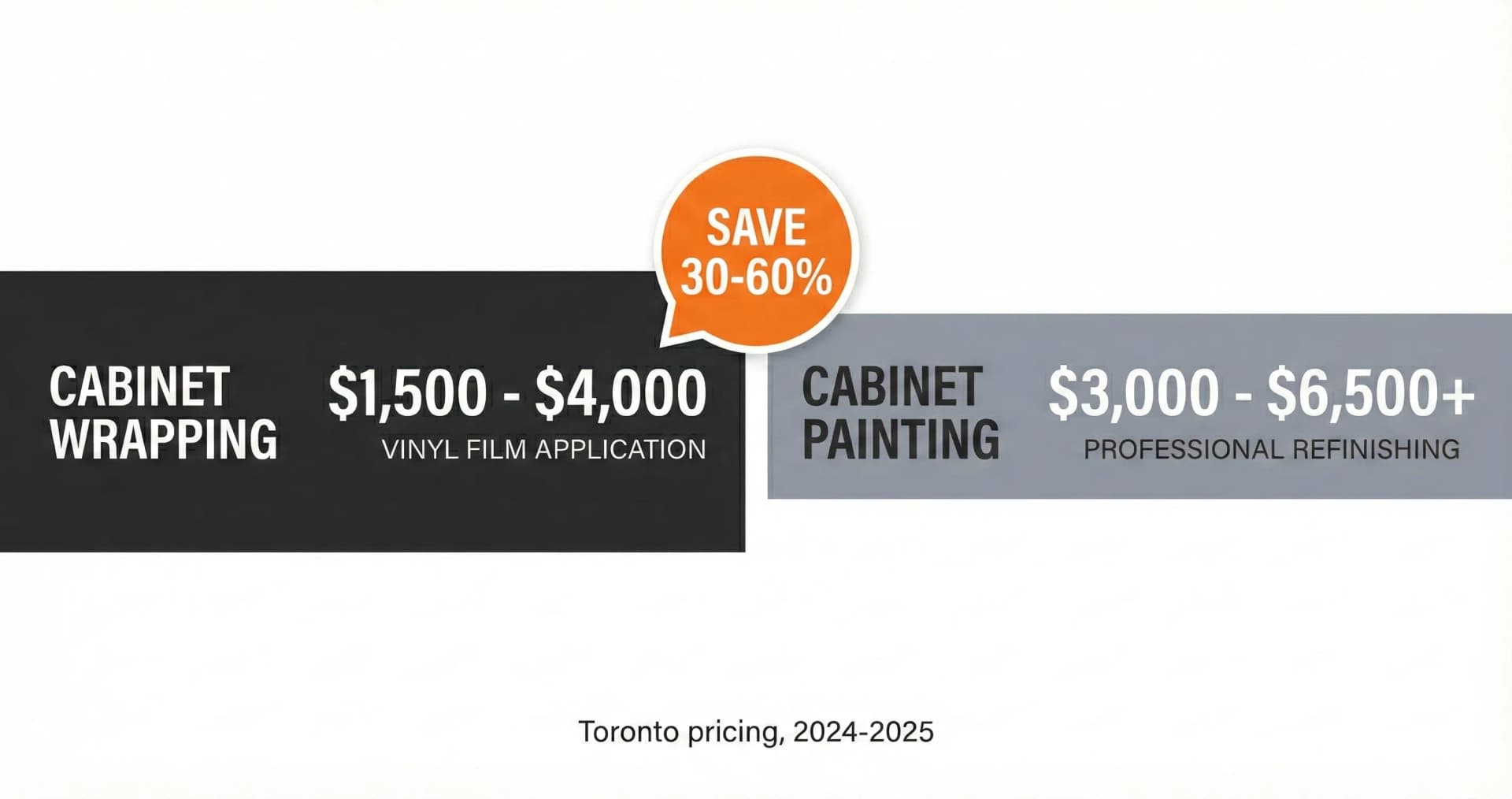
Cabinet Wrapping: $1,500 – $4,000 for a typical Toronto kitchen. The range depends on kitchen size, number of cabinet doors, and complexity of the layout. A standard condo kitchen with 20–25 fronts typically falls in the $2,000–$2,800 range.
Cabinet Painting: $3,000 – $6,500+ for professional work in Toronto. This includes labour, materials, primer, multiple paint coats, and often spray booth rental or setup. Larger kitchens or those requiring significant prep work can push past $6,500.
Why the difference? Wrapping requires less labour time (1–2 days vs 3–7 days), no spray equipment, and no multi-day curing process. The materials themselves are comparable in cost — you're saving on the labour-intensive process that professional painting demands.
Timeline: 1–2 Days vs a Week of Disruption
This is where the difference becomes impossible to ignore.
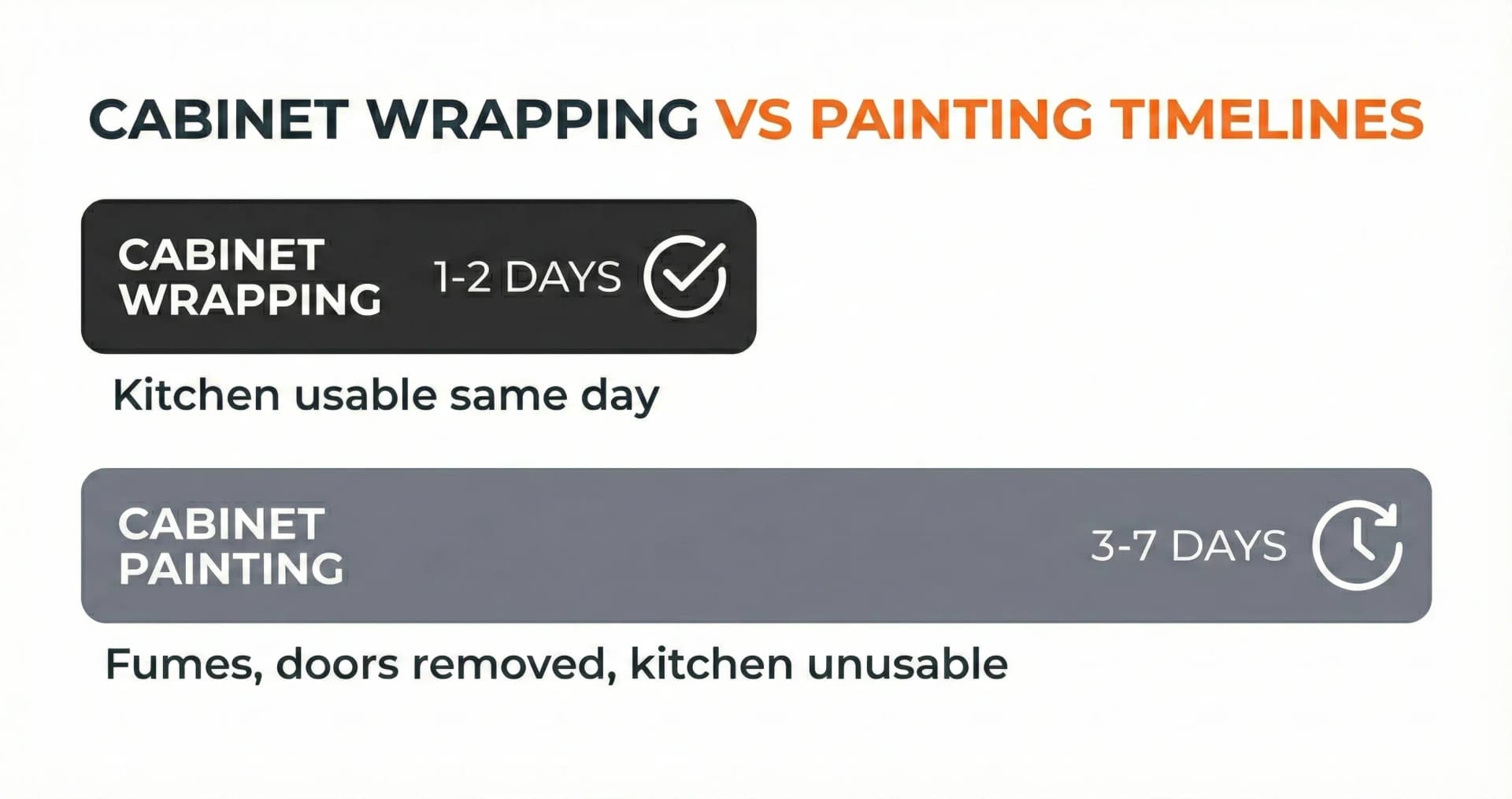
Wrapping: Most kitchen cabinet wrapping projects are completed in 1–2 days. Your cabinet doors stay in place (we wrap them on-site), there's no drying time, and you can cook dinner in your transformed kitchen that same evening.
Painting: Even with efficient contractors, professional cabinet painting takes 3–7 days minimum. Your doors need to be removed, transported (or painted on-site in a dedicated area), primed, painted with multiple coats, dried between each coat, and reinstalled. During this time, you're living with open cabinet boxes, fumes, and plastic sheeting.
For anyone juggling work, family, or simply wanting to avoid living in a construction zone, this timeline difference matters.
Finish Options: What Paint Simply Can't Do
Here's where wrapping pulls ahead in ways most people don't expect until they see the options.
Paint gives you colors. That's it. You can choose any shade of white, gray, blue, or green — but you're limited to flat, solid color with no texture or depth.
Architectural vinyl film gives you:
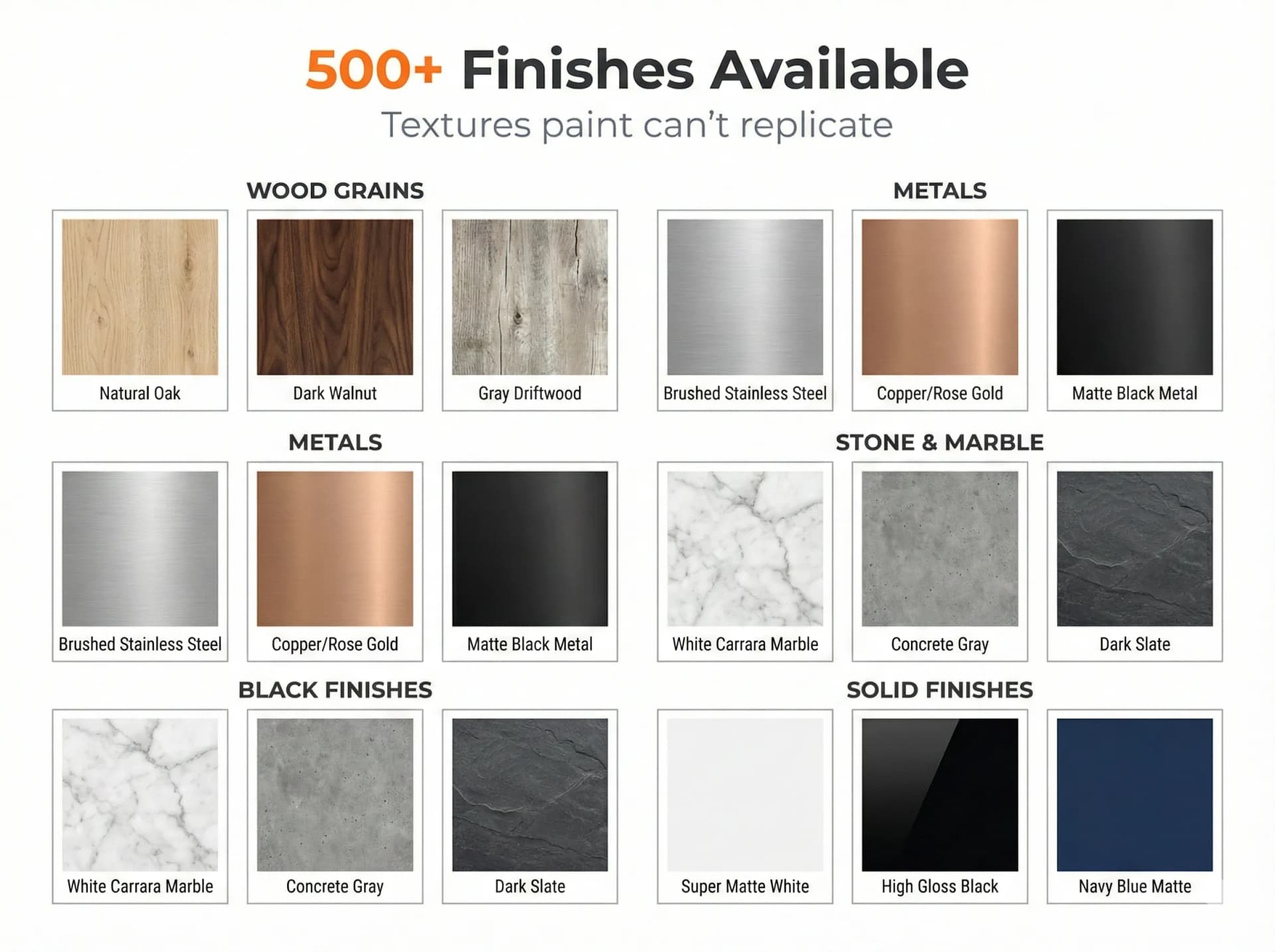
Realistic wood grains — Oak, walnut, teak, ash, driftwood, reclaimed wood looks. These aren't printed patterns; they have actual texture you can feel. From a foot away, most people can't tell the difference from real wood.
Metal finishes — Brushed stainless steel, copper, brass, bronze, gunmetal. Perfect for modern or industrial kitchens where real metal would cost a fortune.
Stone and marble — Carrara marble, concrete, slate, terrazzo patterns. Achieve a look that would be impractical (and incredibly expensive) with real materials.
Super matte — True matte finishes that paint struggles to achieve without showing every fingerprint. Architectural film mattes are engineered to resist fingerprints and smudges.
High gloss — Mirror-finish gloss that stays pristine. Painted high-gloss surfaces show every imperfection and scratch.
With over 500 patterns available between 3M and Bodaq catalogs, you can achieve looks that painted cabinets simply cannot replicate — at a fraction of what real materials would cost.
Durability: The Commercial-Grade Difference
One of the most common questions about cabinet wrapping is durability. Will it peel? Will it look cheap after a year?
Here's the reality: the 3M and Bodaq architectural films we use are the same products installed in Toronto hotel lobbies, condo building common areas, elevator cabs, and retail spaces. These environments see thousands of people daily — constant touching, cleaning, bumping, and wear.
Bodaq Interior Film carries TSSA approval, ASME A17.1 / CSA B44 compliance, and ASTM E84 Class 1 fire ratings. These aren't consumer craft products; they're commercial-grade materials engineered for durability.
In a residential kitchen with normal use, expect 10–15 years of performance. Compare that to painted cabinets, which typically show wear at edges and around handles within 5–7 years, even with quality paint and proper prep.
The key is using commercial-grade film and professional installation. Cheap vinyl from a hardware store applied DIY will fail. Architectural film installed by professionals will outlast paint in most applications.
Which Method Works for Your Cabinet Material?
Not all cabinets are created equal, and the material yours are made from affects which refinishing method works best.
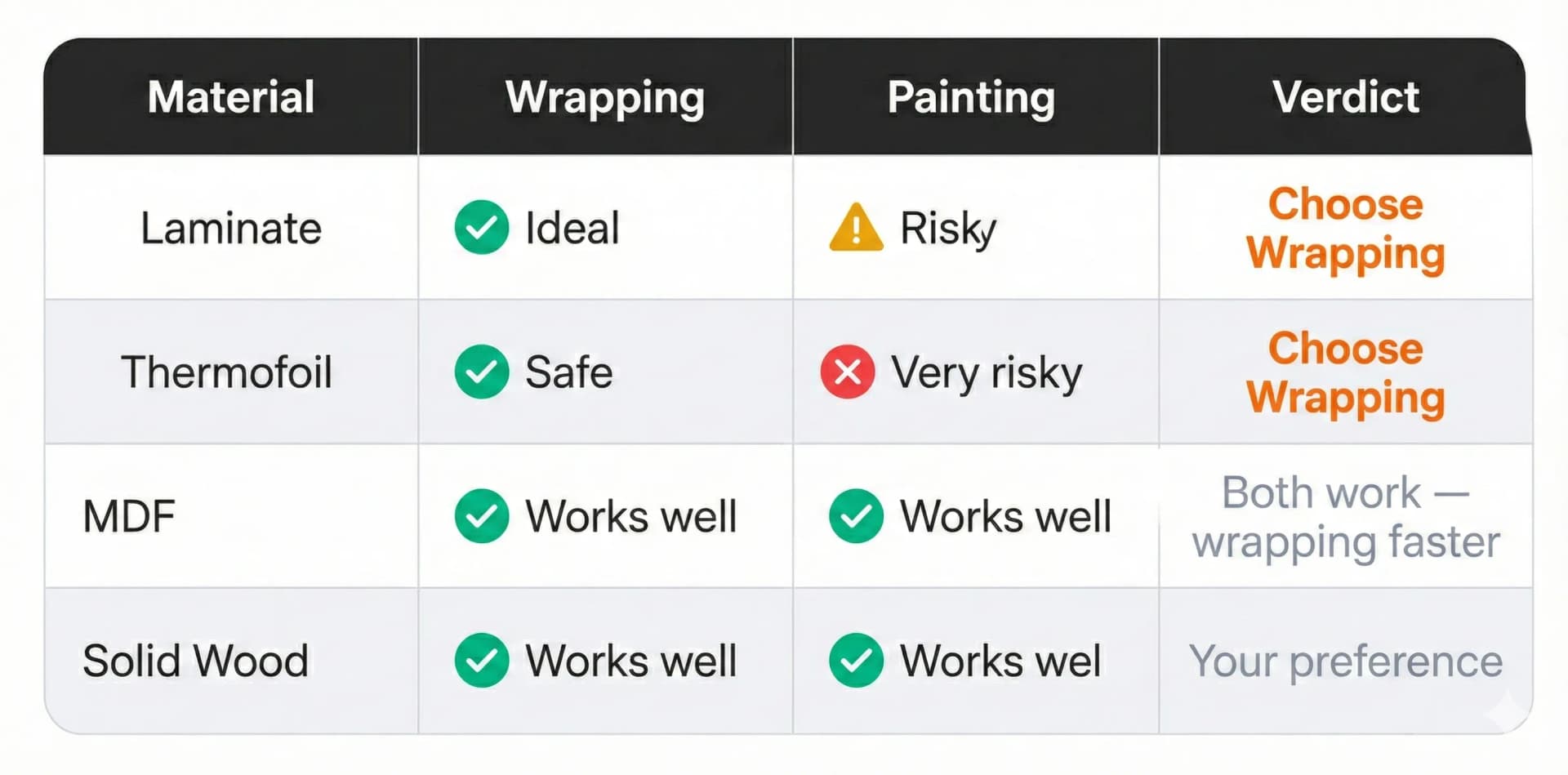
Laminate Cabinets
Wrapping: Ideal. Architectural film adheres perfectly to smooth laminate surfaces. This is one of the most common cabinet types in Toronto condos, and wrapping delivers excellent results.
Painting: Risky. Laminate requires special bonding primers, and even then, adhesion can be inconsistent. Peeling and chipping at edges is common within a few years.
Verdict: Wrapping is the clear choice for laminate.
Thermofoil Cabinets
Wrapping: The safer option. Wrapping covers the existing thermofoil surface without disturbing it. See our full guide: Can You Wrap Thermofoil Cabinets?
Painting: Very risky. Thermofoil is essentially vinyl already bonded to MDF. Painting over it requires either removing the existing thermofoil (labour-intensive and can damage the MDF underneath) or painting directly over it (poor adhesion, peeling likely).
Verdict: Wrapping is strongly recommended for thermofoil.
MDF Cabinets
Wrapping: Works well on smooth MDF surfaces. Fast and cost-effective.
Painting: Also works well, as MDF accepts primer and paint. However, edges need careful sealing to prevent moisture damage.
Verdict: Both work. Wrapping is faster and cheaper.
Solid Wood Cabinets
Wrapping: Works well and offers more design options (wood grain textures, etc.).
Painting: The traditional choice. Solid wood accepts paint beautifully and can be refinished multiple times over its lifetime.
Verdict: Both work well. Choose based on whether you want the design flexibility of wrapping or the traditional painted wood aesthetic.
When Painting Actually Makes Sense
We're not here to pretend painting is never the right choice. There are specific situations where it might make sense:
Cabinets directly adjacent to your oven with no counter space between. Direct, sustained heat can affect vinyl adhesive over time. We use heat-resistant films for these situations, but if your cabinets literally touch your oven, painting has a slight edge here.
You have solid wood cabinets and specifically want the traditional painted look. Some homeowners prefer the classic appearance of painted wood, especially in heritage homes. That's a valid aesthetic preference.
You're doing a simple color refresh on already-painted cabinets. If your cabinets are already painted and in good condition, a fresh coat might be simpler than wrapping.
Resale considerations in specific markets. Some buyers in certain price brackets expect painted wood cabinets. If you're renovating specifically to sell and your real estate agent recommends painted cabinets for your target buyer, it might be worth considering.
These situations represent maybe 10% of kitchen renovations. For the other 90%, wrapping delivers better results.
Common Problems and How to Avoid Them
Every refinishing method has potential failure points. Here's what to watch for:
Painted Cabinet Issues
Chipping at edges and around handles. This is the most common paint failure, especially on cabinets that see daily use. Even quality paint chips when impacted repeatedly.
Yellowing on white cabinets. White and off-white paints can yellow over time, especially near cooking areas where heat and grease are present.
Peeling on laminate or thermofoil. If the primer wasn't right or prep was rushed, paint will lose adhesion on these surfaces within 1–3 years.
Brush or roller marks. Without professional spray equipment, achieving a truly smooth finish is difficult.
Wrapped Cabinet Issues
Edge lifting. This is almost always an installation error — either poor surface prep or improper technique at edges. Professional installation eliminates this issue.
Heat damage near ovens. Preventable by using heat-resistant film on cabinets adjacent to heat sources.
Quality variation. Cheap vinyl fails. Commercial-grade 3M and Bodaq film doesn't. The material matters enormously.
The common thread: both methods require professional execution. DIY painting usually disappoints, and DIY wrapping even more so. Invest in proper installation and you'll avoid most problems.
Making Your Decision
If you've read this far, here's the framework:
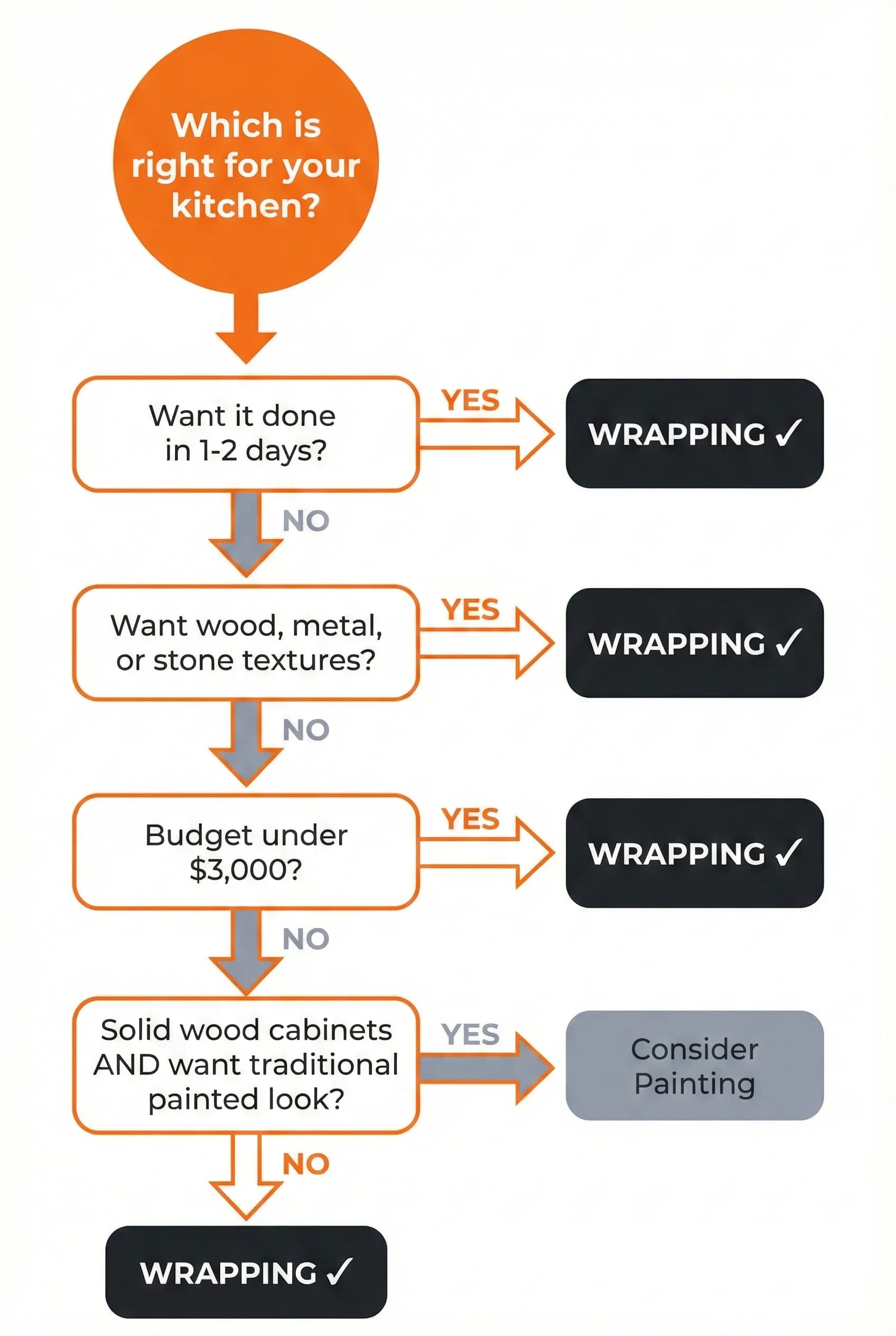
Choose wrapping if:
- You want it done in 1–2 days
- Your budget is under $4,000
- You want wood grain, metal, stone, or textured finishes
- You have laminate or thermofoil cabinets
- You want to avoid fumes and major disruption
- You want the option to change the look later (vinyl can be removed)
Consider painting if:
- You have solid wood cabinets AND specifically want a painted look
- Your cabinets directly touch your oven
- You're already working with painted cabinets and just need a color refresh
For most Toronto homeowners — especially those in condos, those with laminate or thermofoil cabinets, or anyone who doesn't want to live in a construction zone for a week — wrapping is the smarter choice.
Frequently Asked Questions
Is cabinet wrapping cheaper than painting?
Yes. Cabinet wrapping typically costs $1,500–$4,000 in Toronto, compared to $3,000–$6,500+ for professional painting. You're saving on labour time and equipment costs.
How long does vinyl wrap last on cabinets?
Commercial-grade architectural films (3M, Bodaq) last 10–15 years in residential kitchens. These same materials last 10+ years in high-traffic commercial spaces like hotel lobbies.
Does cabinet wrapping look cheap?
No — that's a misconception based on outdated craft vinyl. Modern architectural films are used in luxury hotels, high-end retail, and commercial buildings. They replicate real wood, metal, and stone textures that paint can't achieve.
Can you wrap thermofoil cabinets?
Yes, and it's often the best option. Painting thermofoil is risky because the existing vinyl layer causes adhesion problems. Wrapping covers it cleanly.
What about heat near the oven?
We use heat-resistant films for cabinets near heat sources. Most kitchens have counter space between cabinets and the oven anyway, so this is rarely an issue.
Can the wrap be removed later?
Yes. Architectural vinyl can be removed without damaging the underlying cabinet surface, making it a flexible, reversible option if you want to change the look in the future.
Is painting kitchen cabinets a good idea?
It depends on your situation. For solid wood cabinets where you want a traditional painted look, yes. For laminate, thermofoil, or MDF cabinets — or if you want textured finishes, faster timelines, and lower costs — wrapping is usually the better choice.
Last updated: December 2024. Pricing reflects Toronto-area rates. We update this guide annually.
Related Reading
- 3M vs BODAQ: Which Vinyl Wrap is Right for Your Kitchen? — Compare the two leading vinyl brands
- DIY Cabinet Wrapping vs Professional Installation — Should you DIY or hire pros?
- Cabinet Wrapping Cost in Toronto — Detailed pricing guide
- Interior Door Vinyl Wrapping — Transform your interior doors too
- Kitchen Cabinet Wrapping Services — Learn about our full-service cabinet wrapping
Explore Vinyl Wrap Finishes
Vinyl wrapping offers far more finish options than paint. See what's available:
- Matte & Solid Colour Wraps
- Wood Grain Wraps
- Stone & Marble Wraps
- Textured Wraps
- High Gloss Wraps
- Metal Finish Wraps
Ready to transform your kitchen? Get your free quote today.
Ready to Transform Your Kitchen?
Get an instant quote for your cabinet wrapping project. Upload photos and see your price in 60 seconds.
Get Your Free Quote